Film Noir

Somewhere in the Night: Film Noir and the American City by Nicholas Christopher

Editor’s Introduction

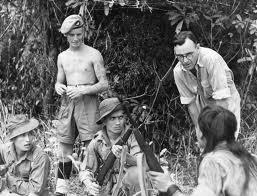
Richard Widmark, star of Pickup on South Street

When I recently circulated a list of presentation topics among the cadets in my “Literature and Empire” course, a third of them wanted to present the Detectives and Narratives of Suspicion topic. It is easy to see why: the basic detective story—a crime scene that doesn’t make sense, a protagonist following a trail of deadly clues through the underground of duplicity, and the discovery of truth—has spread to almost every corner of our storytelling. Not just the hundreds of paperback thrillers and dozens of forensic science and police procedurals on television, but so many mainstream narratives are driven by an investigation into the real world behind the façade.

Every empire engenders narratives of suspicion. The working classes always speculate on who is really running the show (I’m just guessing that is true, I don’t actually know). The players in Hamlet try to determine if the monarchs really mean what they are saying; the Greek commoners invented stories of their rulers consorting with the Gods behind the scenes; books were published in the mid-19th century speculating that the Pope was actually the avatar of ancient pagan religions.

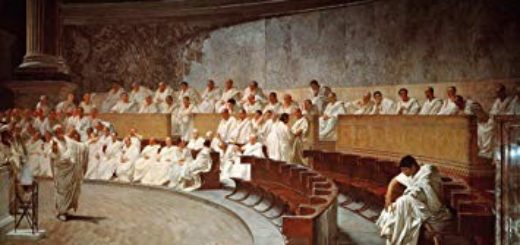
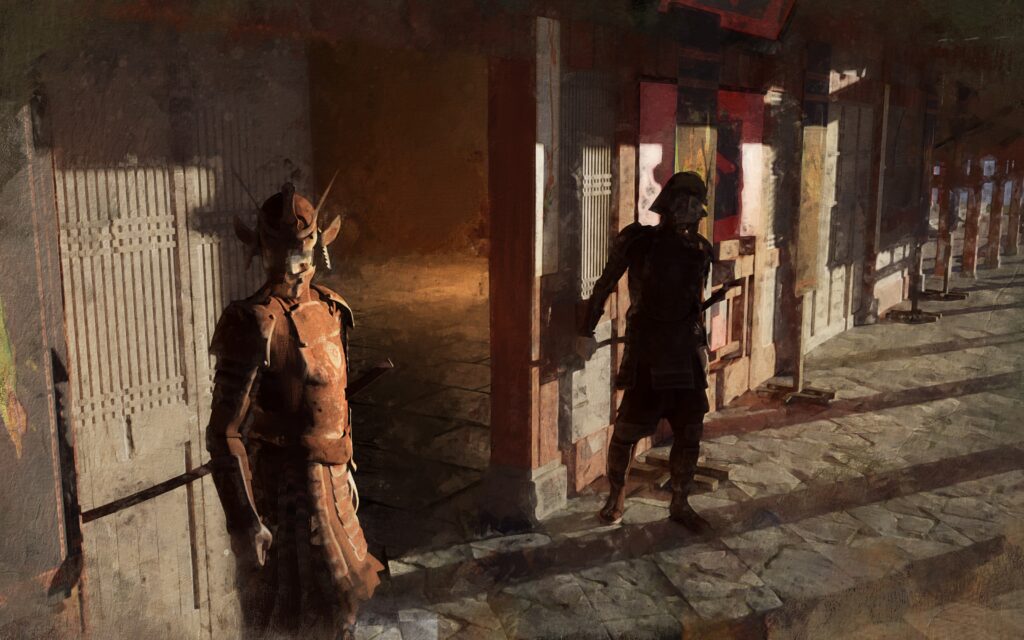
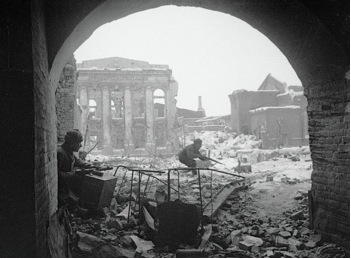
Modern America has its own narratives of suspicion. In the 20th century, no such narrative captured the spirit of the times as vividly as film noir. From Michael Curtiz’s Private Detective 62 in 1936 to 1955’s Kiss Me Deadly, a body of up to 300 films comprises wickedly subversive, stylish stories particular to the American experience.

In this interview and the subsequent book review, we try to introduce the general reader to the topic. Nicholas Christopher is a poet and scholar whose book Somewhere in the Night: Film Noir and the American City opens the door to noir riches.

Film noir’s lasting value to students, teachers and the general reader is in the depth and breadth of the genre’s insight. These are piercing lessons in sociology, economics, history, and art. The resourceful men and women who crafted these noir stories took a sort of wicked glee in dismantling the components of the American Dream with energy and inventiveness.

Resources:


© Journal of Empire Studies 2012
Posted in Current Edition | Leave a comment

The Woman in Melville

Bringing Her Home: The Woman in Herman Melville by Claudia Dixon

Editor’s Introduction

Painting from the frontispiece of an 1899 illustrated edition
Painting from the frontispiece of an 1899 illustrated edition of Moby Dick

Last week, my students and I were considering a haiku about the wind from Mount Edo when one of my best cadets, Dawsey, asked out loud if the poet who wrote it (Basho) might be laughing at us for trying to read so much into his casual little verse. After all, it’s only 17 syllables. What’s the point of analyzing 17 syllables so closely?

It is a question every student asks, sooner or later. I didn’t have a direct answer for Dawsey, except to say that Basho has been dead for 400 years, so he is probably not laughing at anyone still reading his poetry. I don’t have an answer for Dawsey, but I do have an explanation for my own interest in these breakdowns: the more deeply we can understand one poem, and take it apart and put it back together, the more chance we have to understand anything. If we give a literary work a quick pass, we lose.

In her 300-page dissertation, Bringing Her Home: The Woman in Herman Melville, Claudia Dixon takes a good, close look at Melville and comes up with this powerful idea:

The essential mystery of Herman Melville’s life, the one around which all others revolve, is his hidden feminine identification, which troubled his domestic life and found ambiguous representation in his art. I challenge the conventional biographical interpretations of his life and work to reveal the unrecognized feminine second self inside the man.

We often forget—at least I often forget—that Melville was not particularly successful as a writer in his lifetime. He was rarely secure financially. He wrote Moby Dick during a time when he was forced to live with his mother, and part of Dixon’s thesis is that this unhappy situation helped produce the anguish and passion of Melville’s storytelling.

Claudia Dixon is a bold thinker and a natural writer. I wish writers like Claudia Dixon were producing all of our textbooks. You can see a little of both her wide knowledge of the subject and her clear writing ability in these two excerpts from her dissertation:

Melville’s first two novels, Typee and Omoo, belong to the giddy period of  adult freedom and exploration before he was married. As literature, they are markedly different from the novels and stories that came after them. That is because the rest of Melville’s work was written in the crucible of marriage and family life. Though the first two novels contain captivity scenarios, they are a far cry from the imprisoned Ahab’s furious struggle against invisible bonds.

Robertson-Lorant suggests Melville’s inner struggle during the writing of Mardi. “‘Wild’ was how he felt while he was writing Mardi. He could feel dark undercurrents tugging at his soul as he searched for a way to express what had gone unsaid in the two travelogues for which he was famous” (176). What had gone “unsaid” was Melville’s feminine identification. Robertson-Lorant claims that Melville’s genius is “his ability to heal himself by writing” (177), but she neglects to say what infirmity or condition he needs to heal in himself. I believe he writes to both liberate and mourn the woman in himself.

In chapter three, she looks at Melville’s friendship with Nathaniel Hawthorne, and how much it meant to Melville that a fellow author understood what he was trying to do. Here is how she describes Melville’s feelings of despair and entrapment:

Feeling trapped in a double bind of wanting what he could not allow himself to have, and what his family and his culture’s norms would not allow, he vented his rage upon those close at hand. It is clear that Melville desired to be free of domestic concerns and the necessity of providing for his family. As he wrote to Hawthorne, “I am pulled hither and thither by circumstances…dollars damn me and the malicious Devil is forever grinning in upon me, holding the door ajar” (Norton MD 557).  

In the following interview and excerpt from her dissertation, we see a hint of the author’s grand reinterpretation of Melville.

Lesson Plan

Objective: Examine the work of Herman Melville through a new lens by reading Claudia Dixon’s dissertation and her interview with the Journal of Empire Studies. Consider Dixon’s thesis that Melville, despite his public life as masculine and heterosexual, was haunted by a hidden feminine identification, and evaluate his writing in this context.

Resources:


© Journal of Empire Studies 2012
Posted in Current Edition | Leave a comment

War and the Natural World

“Scarred Lands & Wounded Lives: The Environmental Footprint of War” by Alice and Lincoln Day

Editor’s Introduction

My cadets always listen carefully to the “Law of Unintended Consequences.” It is a law that applies in the most surprising of contexts, none more so than warfare.

The unintended consequences of war—both good and bad—are fascinating to my students. My cadets always engage with lesson plans on the technology that came out of World War II, for example, or the packs of wild dogs in Vietnam which are the descendants of U.S. canine corps from the late 1960’s, or the marine sanctuaries formed by sunken battleships.

In their visually dramatic and far-reaching documentary film, “Scarred Lands and Wounded Lives: The Environmental Footprint of War,” filmmakers Alice and Lincoln Day bring to light another dimension of unintended consequences: what war does to our ecologies, both global and local. In a passionate and well-researched narrative, the film documents the impact of battle on its “silent casualty,” the natural world. Continue reading

Posted in Current Edition | 15 Comments

Kingdom Under Glass

Kingdom Under Glass: A Tale of Obsession, Adventure, and One Man’s Quest to Preserve the World’s Great Animals by Jay Kirk

Editor’s Introduction

Illustration commissioned by JES copyright @ 2011 Margaret

The relationship between man’s empire and nature is critical, as we are finding out today. Overwhelmingly the relationship is one of sheer exploitation, but the style and content of our attitude towards nature in all its forms has taken vastly different form in different societies.

Nature and empire is an impossibly sprawling and complex field, encompassing everything from Temple Grandin and humane slaughterhouse practices to the fracking controversy to the history of British gardens to modern genetic recombination. We need nature’s stored energy and stored beauty, but we seem to be tragically clumsy in our extraction of it. Continue reading

Posted in Current Edition | 8 Comments

War, Society, and Commerce in World War II

From Submarines to Suburbs: Selling a Better America, 1939–1959 by Cynthia L. Henthorn

Illustration commissioned by JES copyright @ 2011 Margaret Hurst

Editor’s Introduction

The success of most wars depends in part on several important non-combat factors, and crucial among them is public support.

In her fascinating and ambitious 2006 book, From Submarines to Suburbs, Cynthia Henthorn examines both the relationship of commerce to war and the relationship of the citizen to war. It is a timely topic, since America is currently engaged in two wars under very different conditions than World War II. There is no corollary today to the “arsenal of democracy” that so successfully powered America’s World War II efforts, and the American public seems relatively disengaged from today’s wars. In the following interview, Henthorn introduces readers to her topic, discussing the subtle and not-so-subtle connections between our kitchens, our concept of the future, our corporations, and World War II.  A book review touching on some of the main points of her book follows.

Continue reading

Posted in Current Edition | 8 Comments

Geometry, Radar and Empire

Illustration commissioned by JES copyright @ 2011 Margaret Hurst

by Judd Ammon Case


Copyright @ 2010 Judd Case
A History of Grids
Related Topics: Critical Thinking
Communications, Technology
Social Studies


This is an excerpt from the complete dissertation, which is available here:


This new C-band, 3 megawatt radar with a 50-foot dish antenna has recently been installed on north Kennedy Space Center. It is one of the largest of its kind in the world, providing higher definition imagery than has ever been available before. (Photograph Wikimedia Commons)

Introduction

My students always get a kick out of writing like this – provocative, smart, funny, and taking with a big idea. In this case, the idea is really big: that radar was a precursor to GPS in giving us a way to conceive of our universe, and to map ourselves within that universe (and that is only part of the thesis). Here are two typical sentences: Continue reading

Posted in Current Edition | 1 Comment

Germany and America


NATIONALITY AND COLONIAL STRATEGIES

19th Century German Views of America

by Jens-Uwe Guettel

How the American Expansion Resonated in Germany

– Introduction, Interview, Excerpt, Dissertation, Lesson plan

– Topics: Sociology, Cultural underpinnings of war


Illustration commissioned by JES copyright @ 2011 Margaret Hurst


Introduction

We all tend to see what we want to see — in ourselves, in our friends, in our culture, and in other cultures. In his dissertation, Jens-Uwe Guettel takes a penetrating look at how Germany viewed America over the course of the 19th century, the period of America’s great expansion westward.

In the following interview and excerpt, you will find highlights of Prof. Guettel’s wide-ranging consideration of the many authors, themes and images which were part of this cultural “moment.”  In the dissertation itself, you will find a deeper look at the novels and writings which reflect the complex attitudes and ideas of the times. Germans certainly noticed what Americans were doing as they expanded the nation westward, but not always the same we saw ourselves.

Continue reading

Posted in Current Edition | 16 Comments

Visigothic Architecture


ARCHITECTURE CROSSING CULTURES

Some Observations on Visigothic Architecture and Its Influence on the British Isles

By Jamie L. Higgs

How did Visigoth churches get to Ireland from Iberia?   

– Architecture, Religion, Iberian Studies

– Introduction, Interview, Excerpt, Lesson Plan, Full dissertation


Illustration commissioned by JES copyright @ 2011 Margaret Hurst


Introduction

How do cultural influences travel from place to place? It is sometimes easy to trace these lines of influence in the modern era, but how did this process work in the past? Looking at the past, how can we decipher which elements of architecture or music or literature came from which sub-culture? In her dissertation, the author looks closely at churches of the 9th century and finds that the architectural styles we have thought of as Anglo Saxon may actually be Visigoth. She cites a tiny Celtic colony called Britonia, located in the Galician region of what is nowSpain, as a vehicle or agent for the transmission of Visigoth architecture toEngland.

The connections among these far-flung church structures indicate that, while it is easier for us to consider “English” history and “Spanish” history as separate, it was in some ways a single interconnected medieval world.

Continue reading

Posted in Current Edition | 1 Comment

James Joyce


NEW DIMENSIONS IN A CLASSIC NOVEL

James Joyce and the Consumption of Empire

by Lynne Bongiovanni

– Literature, Comparative Literature

– Introduction, interview, excerpt, lesson plan


Illustration commissioned by JES copyright @ 2011 Margaret Hurst

Introduction

James Joyce is a fascinating writer, but he can be a most difficult author to teach.  In her dissertation, Lynn Bongiovanni brings a recent viewpoint – empire theory – to bear on this most singular author, and finds an interesting paradox. While Joyce inveighed against imperial rule – in this case, Ireland’s “colonization” by the British – he was capable of celebrating the fruits of empire in his writings.  Just as you and I may deplore the consequences of what might be called the modern technology “empire,” even as we happily use our refrigerators and computers, Joyce had his own conflicted attitude towards empire.

In this brief excerpt from Prof. Bongionvanni’s full dissertation¸ and in her interview, the author begins to set out the structure and overview of Joyce’s conflicted politics.  In the later parts of her dissertation, she goes into detail, using specific passages from Joyce’s prose to illustrate her thesis.

Continue reading

Posted in Current Edition | 3 Comments

Partnership for Disorder


INTERNATIONAL RELATIONS

A Partnership for Disorder:  China and America in World War II

by Xiaoyuan Liu

– Introduction, interview, book excerpt (in a separate file), link to book, lesson plan

– Topics: International Relations, World War II, War and Culture

– Linked topics: current-events China – U.S. relations


Illustration commissioned by JES copyright @ 2011 Margaret Hurst


Introduction / Book Review

When I searched dissertation titles to find topics that relate to empire, I ran across a thesis entitled A Partnership for Disorder: China, the United States and their policies for a postwar disposition of the Japanese Empire 1941-1945.  When I contacted the author, Xiaoyuan Liu, I found that the thesis had been turned into a book.

Here you will find a tantalizing (to me) excerpt from the book’s opening chapter and, below, an interview with Prof. Liu on the specifics and the legacy of that brief partnership.  It is a fascinating moment in the recent past when the two nations worked closely together. One of the partnership’s false assumptions, according to the author, was the idea that a government can speak for an entire nation. As a result of this fiction, the two countries’ grand plans for the Pacific fell apart almost immediately. China itself fell into four years of civil war which changed everything about Asia; other revolutions drastically altered the entire Pacific region. America was left with an inflated plan on paper that bore little relevance to political realities.

Continue reading

Posted in Current Edition | 4 Comments